Winter Train vs. Car to the Alps: A Practical Comparison for Snow Travelers
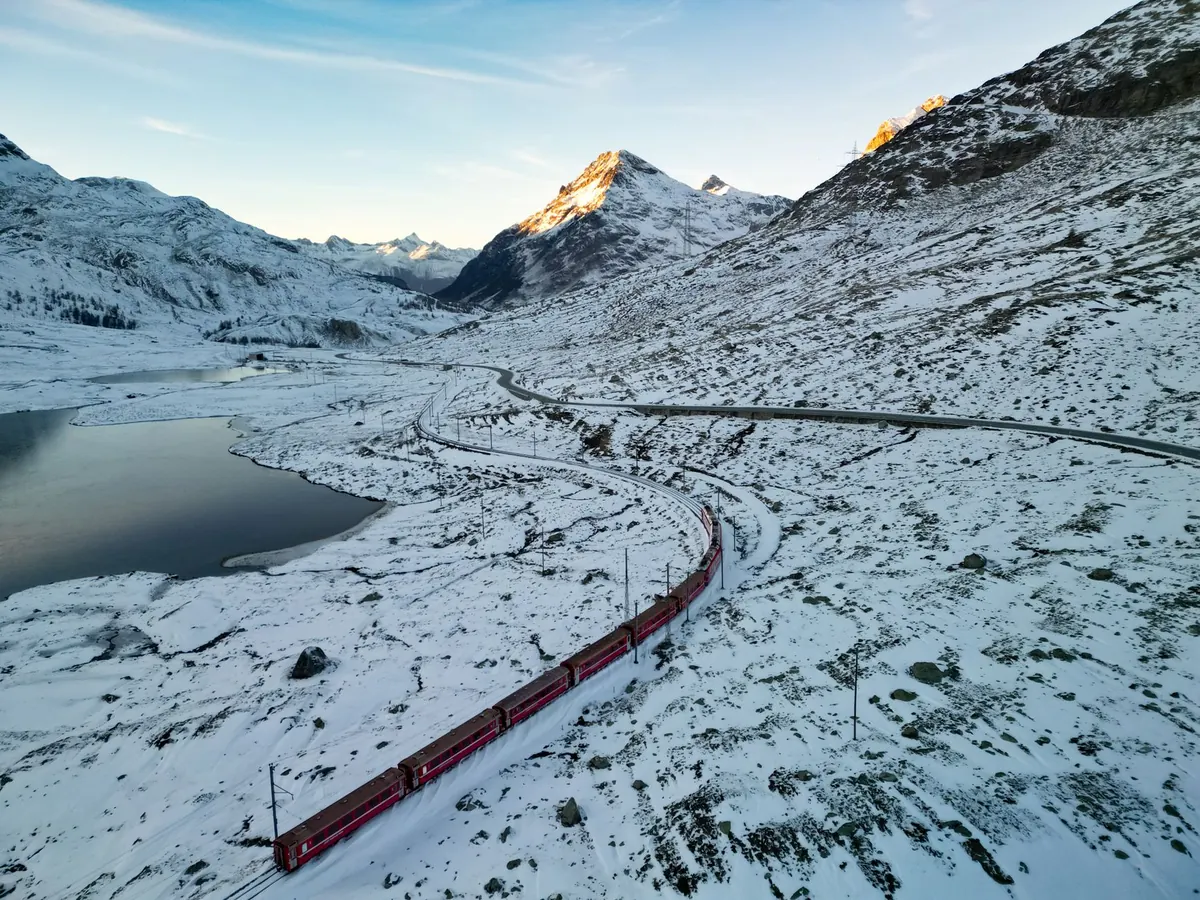
The decision usually gets made in a kitchen in October, over a laptop, by someone who has just found a cheap apartment in the Alps and is now trying to work out how four people and four pairs of skis are supposed to get there. The train looks civilised until you picture dragging a ski bag across a platform in falling snow. The car looks simple until you remember the last time you fitted chains in the dark on a hairpin. Both are workable. They just solve different problems, and the right answer depends less on distance than on where your resort sits and how much gear you insist on bringing. Here is how the two options actually compare once you strip away the brochures.
Luggage: What You Can Realistically Carry
This is where the two modes diverge fastest, and where most train trips succeed or fail.
On a car journey, luggage has no real limit. A roof box swallows skis, poles, boots, helmets and the extra bag of food you bought on the way. Four adults fit comfortably with winter kit for a week, and nobody has to decide whether the boot bag counts as hand luggage.
On a train, every item has a cost in effort. Two bags plus a ski bag is roughly the ceiling of comfort for one person, and that assumes lifts, escalators and no tight connections. Practical adjustments that make a real difference:
- Use a boot bag as your main carry-on. Boots travel with you rather than in the hold, and the bag doubles as a daypack once you arrive.
- Book seats or a reservation where the operator offers one. Ski bags belong in the vestibule storage, not blocking the aisle, and on busy weekend services space is genuinely limited.
- Pack soft, not square. Soft holdalls squeeze into racks that rigid cases cannot.
- Check whether your route needs a change of station. A single change with a ski bag is fine; three changes in a snowstorm is a test of character.
Snow, Roads and Timetables: Who Copes Better
Weather is the variable that flips the comparison, and it flips it in both directions.
When the car wins
If your resort sits in a valley with a decent road, a car gets you to the door with gear intact. That matters for chalets on the edge of a village, self-catering apartments with a supermarket run to do, and families with small children who cannot be expected to haul sledges onto a bus. Winter tyres are a legal requirement in many Alpine countries in winter conditions, and chains in the boot are sensible even where they are not compulsory. Check both before you leave; a hire car may come with neither.
The car's weakness is the last few kilometres in heavy snow, when passes close, tunnel queues build and resort car parks fill early. Arriving on a Saturday afternoon in peak season often means circling.
When the train wins
Snow does not stop a train. There is no chain-fitting at the roadside, no scraping ice off a windscreen at minus twelve, and no white-knuckle descent after a long ski day. Some resorts are effectively train-only: Zermatt, where cars stop at Täsch; Saas-Fee and Avoriaz, both car-free; Les Arcs, reached by funicular from Bourg-Saint-Maurice. In those places the train is not the virtuous choice, it is simply the easier one.
A ski bag on a train is a nuisance for one afternoon. A car stuck behind a closed pass is a nuisance for the whole first day of your holiday.
Cost: Read the Whole Receipt
Comparing a train fare with a tank of fuel is the wrong calculation. Count everything.
For the car: fuel, motorway tolls, any national vignette, tunnel fees, parking at the resort for the week, and the wear on winter tyres. Add chains if you do not own them. Divide by the number of people, and for a full car the figure often looks reasonable.
For the train: tickets per person, ski carriage where charged, seat reservations, and the resort transfer at the far end — a bus if the timings suit, a taxi or minibus if they do not. Group and family offers, railcards and flexible-date tickets can move this number a long way, so it is worth checking the operator's own site rather than a resale platform. Prices swing hard by date and season; two people travelling midweek in January are in a different world from four travelling on a February Saturday. A short note on money: fares and tolls change, and local taxes and rental terms vary, so confirm current figures before you commit.
Flexibility and the Last Mile
The car is unbeatable for improvisation. You can leave at four in the morning, stop at a valley bakery, detour to a different ski area because the snow is better there, eat dinner in the next village, and drive home a day early if the forecast turns grim.
The train trades that for something calmer. You can read, sleep, eat, walk to the buffet car, and arrive without a driving shift to recover from. The cost is a fixed timetable: miss the last connection and the plan collapses, so build in slack rather than sprinting between platforms with a ski bag.
The last mile decides more trips than people expect. Before booking, answer three questions: does a bus meet your train, does it run on the day you travel, and does it take luggage? In many resorts the answer is yes but not in the evening. A pre-booked shared minibus is often the difference between a relaxed arrival and a cold wait.
The Hybrid That Quietly Wins
You do not have to choose. Drive to a gateway town with a station and cheap long-stay parking — think Bourg-Saint-Maurice, Moûtiers, Le Châble, Täsch — then take the train, funicular or bus the last stretch. You keep the car's luggage capacity and roadside flexibility for the journey, and skip the hardest driving and parking problems at the top. For families with small children, or groups splitting between two resorts, this is frequently the most sensible arrangement on the table.
A Practical Checklist Before You Book
- Confirm exactly where your accommodation sits and whether the final stretch is drivable, car-free, or only reachable by train, cable car or funicular.
- Count bags honestly, then add one. If the total exceeds two per person plus skis, favour the car.
- Check whether the ski bag needs a reservation, and book seats on any busy weekend service.
- For driving, verify winter tyres, carry chains, and check the mountain pass conditions a day ahead.
- Look up the resort bus timetable for your actual arrival hour, not the ideal one.
- Compare total costs per person, including parking and transfers, rather than ticket versus fuel.
Whichever you pick, book the return leg with the same care as the outbound. The trip home is where tired legs, wet kit and a Sunday timetable combine to cause the most trouble — and a seat you reserved in advance is worth more than any amount of optimism at the station.
Photo: urtimud.89 / Pexels